Storyboards Clients Can Approve
 Creative Studio Editorial
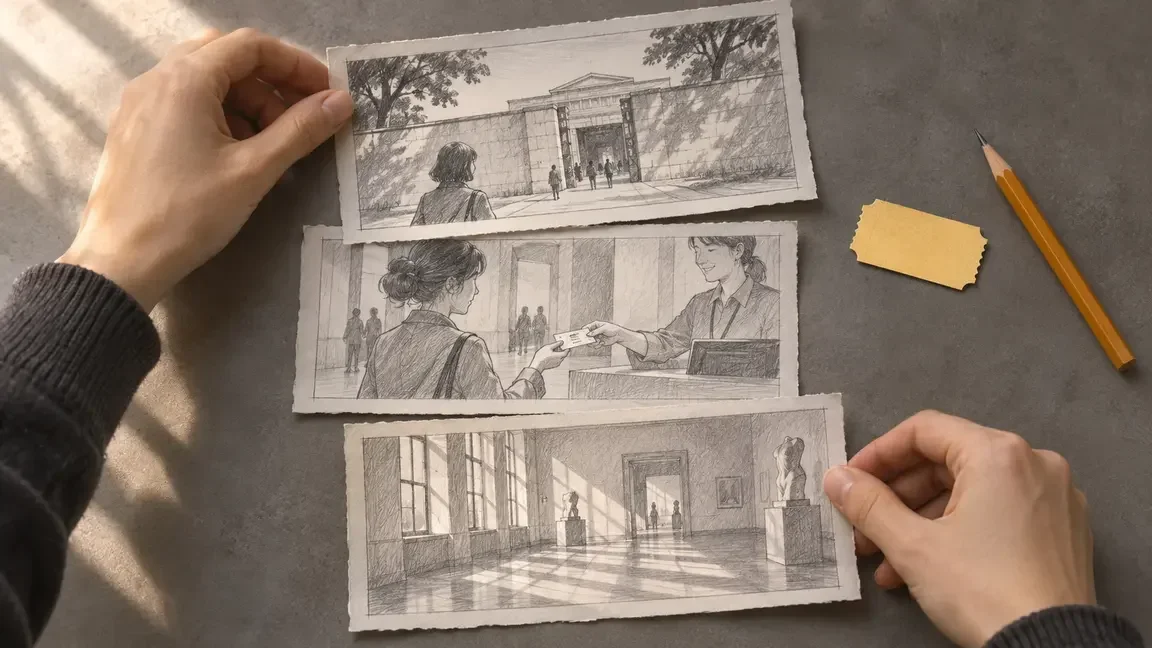
A museum commissions a twenty-second film to explain how visitors enter a new exhibition. The director's first storyboard looks polished. It also shows people walking straight from the street into the main gallery. At the review, the visitor team explains that the entrance and gallery are on different floors. The project now needs a new sequence, and several detailed frames have to be remade.
A storyboard earns approval by making the choices that matter visible. Show the visitor journey before investing in finished images, and give the people who know the venue a way to check it.
Start with the decisions in the room
Ask who can approve the visitor journey, exhibition language, and visual direction. In this example, the museum's visitor team knows the route. The communications lead approves the on-screen wording and manages the final review. The producer checks what the crew can actually film.
Give each person a small job in the first pass. The visitor team can check where the ticket is presented and which route the film describes. The communications lead can confirm the exhibition name and whether the entry card needs a booking instruction. The producer can mark any views that need a different time of day or permission to film.
Make the panels specific enough to discuss
Give each panel an action, a rough duration, and the information it must convey. A twenty-second sequence might open outside, show the ticket check, reveal the turn toward the lift, and then open on the exhibition floor. A loose sketch or a reference photograph can carry each of those beats. Add a short note if the depicted venue or person is only a placeholder.
For a generated reference frame, state what the client is reviewing beside the image. The image may be there to show camera height or the pace of a reveal. Use an approved floor plan or a location photograph to settle actual access details. Attractive reference art can make an imagined layout look more certain than it is.
Put the open question next to the relevant shot
A general feedback box tends to collect broad reactions. Give the client a useful place to leave a decision instead. Beside the lift panel, ask whether the visitor needs to see the sign before or after the turn. Beside the ticket check, ask whether staff will be present. If the answer changes the timing, record the new order in the next version and reread the entire sequence at its intended duration.
Invite the person responsible for each decision to confirm it in the shared review. Keep their response with the panel number or short action label. If the review happens on a call, write back the agreed change while everyone can still correct it. “Show the lift sign before the turn” is a clearer production note than “Improve wayfinding.”
Carry approved choices into the shot list
Once the route and copy are approved, mark the version and write which items the team still needs to resolve. The board may confirm the shot order, entry process, and exhibition name while leaving wardrobe and exact camera height for the location visit. Share that version with the crew, editor, and person responsible for final approval.
If a later change comes in, name which panel and downstream shots it affects. A change to the route could require a new establishing angle, a different caption, and a revised transition. The team can make that decision while the scope is still clear.
The museum film's approved board might end up with two rough pencil panels and two location photos. It works because the client can see the visitor's path, agree on what the film tells people, and recognize the same plan in the production schedule.