From Rough Cut to Three Deliverables
 Creative Studio Editorial

A tram rounds a corner in a wide city shot. The motion leads the eye from one side of the screen to the other, and a street sign gives the viewer a sense of place. In a vertical crop, the tram and the sign may never appear in the same frame. A separate pass for each deliverable lets you decide which visual cue should carry the scene.
Find the beats every version needs
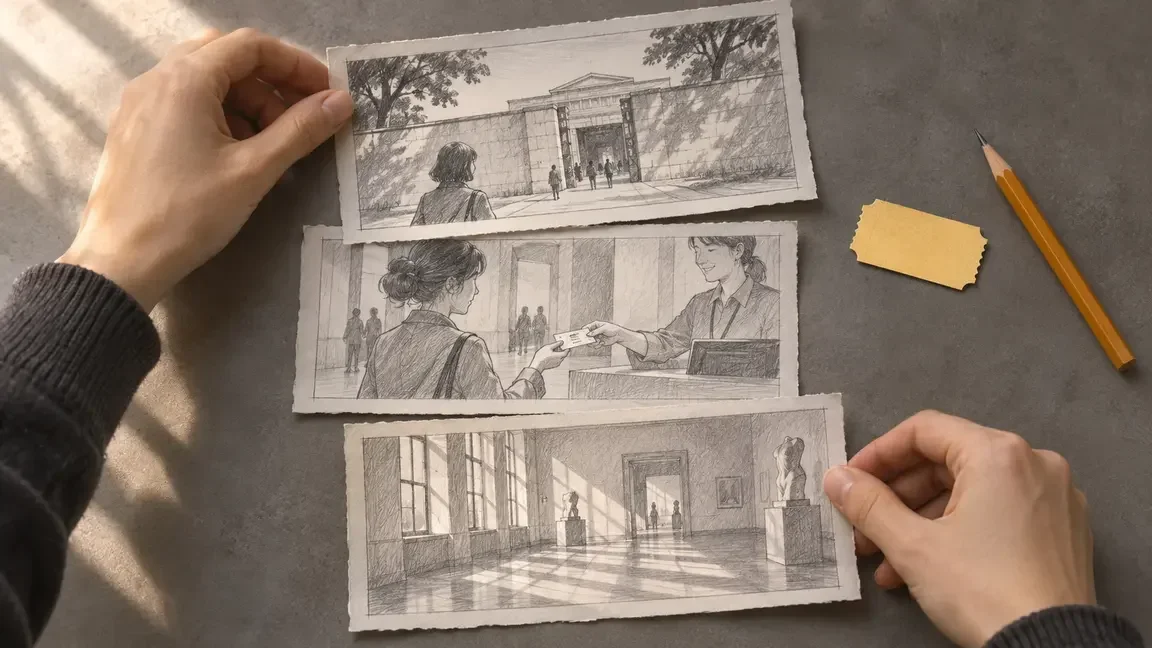
Watch the rough cut and write one line for each beat. In this sequence, the first shot establishes the route, the second takes us inside the tram, and the last leaves space for a campaign line. Each version needs to establish movement, show the passenger’s experience, and give the final text time to register. The wide turn is one way to do the first job. A tighter shot of the tram entering frame can do it in less horizontal space.
Keep the approved rough cut as a reference. Name the new versions by destination and aspect ratio so a comment on the square edit lands in the right timeline. Confirm the actual delivery dimensions and caption treatment in the brief before making the final pass.
Reframe the shots in motion
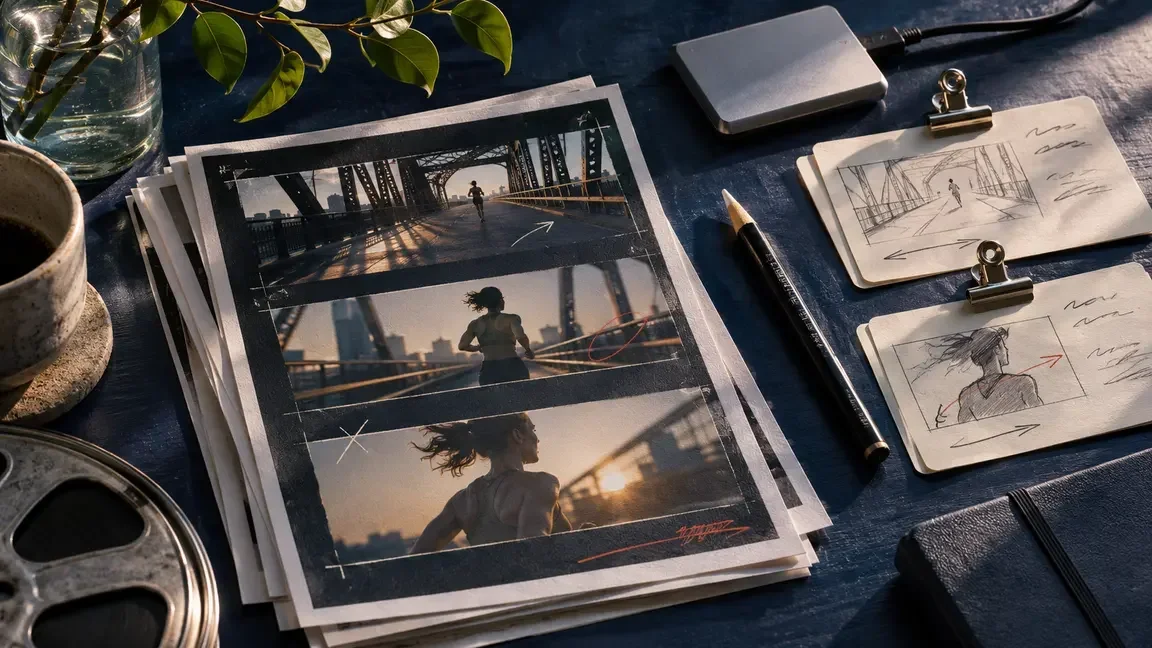
Play each candidate crop at normal speed. On the landscape timeline, keep enough of the street for the tram’s turn to make sense. In square, move the crop early enough for the front of the tram to enter and leave naturally. If reframing produces a distracting sideways chase, try a later edit point where the tram already fills the crop.
The vertical version may need a different opening. Try a close view of the wheels moving past the curb, then cut to the passenger. That sequence establishes travel while keeping both subjects comfortably inside the frame. When a shot depends on a person seeing what is just offscreen, put the object of their attention in the next shot so the connection survives the crop.
Check titles and captions at delivery size
Export a quick draft and watch it at the size the audience will see. Look at the longest caption, text near the edges, and the smallest detail that carries meaning. If a line falls over the tram window and becomes hard to read as the light changes, adjust its position or the timing of the cut. Check the placement against the destination’s current interface, especially anywhere playback controls or buttons cover part of the frame.
For the end card, allow enough time to read the text out loud once without rushing. Apply the same check with sound muted. The first few shots should establish the place and motion even if the viewer misses the rail noise.
Send the three cuts as a set
Label each file with its format and version, and identify it in the review note by destination. Give the reviewer one question for each cut, such as whether the vertical opening reads quickly enough. A single note can also flag shared revisions, including a new headline or corrected caption. That keeps a small change from landing in just one of the three versions.