Sound Belongs on the Shot List
 Creative Studio Editorial
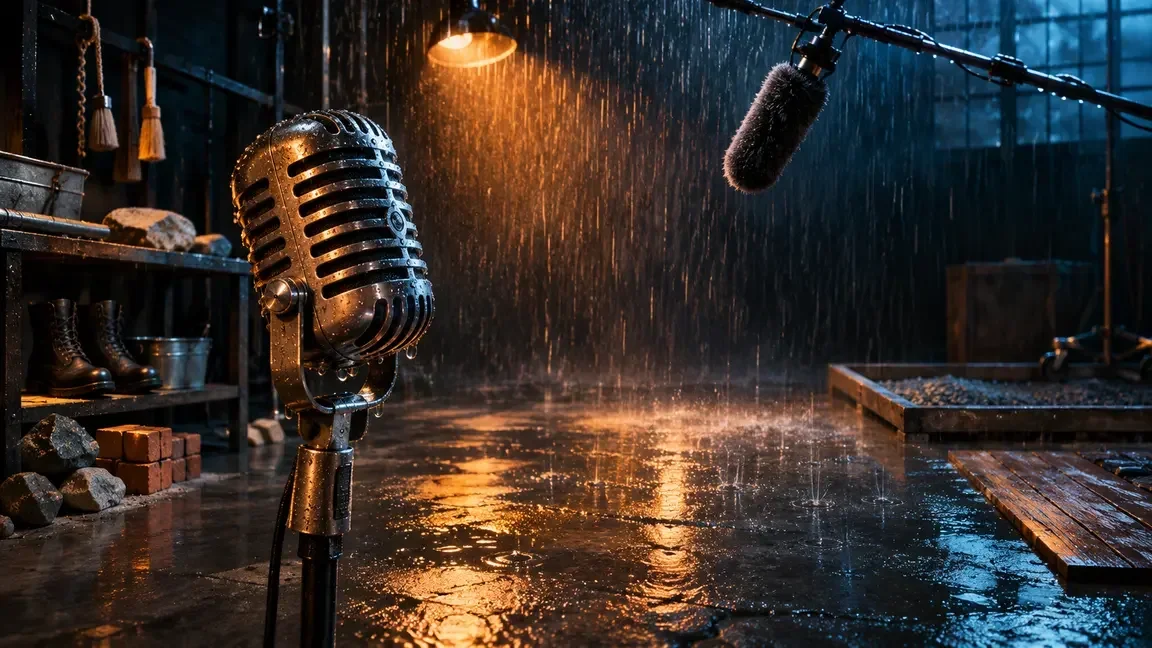
A rider stops outside a closed shop in the rain. The pictures can take this moment in several directions. The hiss of a bus and a quick exchange of words might make it feel like an ordinary commute. Let those sounds fade, leave the rain on a metal awning, then bring a key into focus. Now the moment is about waiting for the door to open.
Write that sound into the scene while there is still time to change the pictures. A note like “the key turns before we see the door move” changes both the edit and the shot you need. It gives the editor something more specific to work with than “add atmosphere.”
Decide where the listener is
Think about where the sound is heard from. Outside the shop, rain is close, the street is broad, and speech through the window is muffled. Once the door opens, the rain can move behind the listener. Now a bell, the shop floor, and a radio on the counter can have room of their own.
Pick one change in perspective and make it legible. A cut from outside to inside can work with a few short sounds and a shift in level. You may only need the door, the bell, and the quieter room. If you also add a bus, a passing conversation, and a music accent, listen again to see which sounds the person watching can actually follow.
Put a sound cue on the shot list
Give each sound that carries the story a place in the sequence. The cue can be a sentence such as “hear the shop bell over the last frame of the street.” In an early edit, that note tells you where to leave a little more time. In a shot list, it tells you you may need a clean beat before the next action.
A scene with speech needs room for the line. Set up the timing with a temporary reading before you commit to the cut. Then try that version on a small speaker at a modest volume. If the line gets lost, check what else is happening in that moment. Lowering several sounds together can leave the same problem intact. Simplifying the moment may bring the speech into focus.
Give the edit room to change
Keep dialogue, important effects, and ambience on separate tracks where your source allows it. If a generated clip arrives with sound already mixed into it, listen for anything you want to preserve before muting it and rebuilding around the effect you need. A shorter visual cut may still work with the original rain carried across the transition.
Review the scene three ways. Watch and listen together. Listen once without watching to hear where the action loses its shape. Then mute the edit and check what someone watching silently can still understand from the pictures and captions. Those are different editorial questions, and a single playback rarely answers all three.
In the doorway scene, the metal awning, key, and bell are enough to guide the transition. The decisive choice was placing the key before the opening door. By the time the mix begins, the scene already has a point of view.