AI Video for Marketing: A Practical Creative Testing Plan
 Creative Studio Editorial
A marketing video can look finished before the thinking behind it is finished. The lighting works, the edit moves, and the final frame carries the right message. Yet nobody has agreed on what the video should help the team learn.
Before generating another scene, turn the assignment into a question. Which opening makes the product easier to understand? Does a demonstration earn a more useful response than a lifestyle scene? A clear question gives every creative decision a purpose, including the decision to keep an existing shot.
Start with the decision you need to make
Write a sentence that connects a creative choice to a business outcome. For example: showing the product in use will produce more completed purchases than opening with an atmospheric scene. That is a hypothesis you can investigate, rather than a promise about the result.
Choose the outcome before reviewing the work. A campaign intended to generate purchases needs a different assessment from a video introducing an unfamiliar idea. Views, clicks, and purchases describe different actions; pick the one that answers your question, then use the others to understand the journey.
Google's video experiment guidance also begins with a hypothesis and recommends keeping one variable in focus. Its official experiment guide explains the platform-specific setup. The creative planning method below can be used before you choose a distribution platform.
Give the test a narrow creative brief
Separate the parts that must stay consistent from the part you want to explore. Keep the audience, offer, destination, and call to action consistent when the opening scene is your test variable. Changing all of them would give the team several possible explanations for any difference.
Treat the shared material as a small production kit. Prepare the approved product details, end card, caption style, soundtrack, and factual claims. Then write two openings that ask the same audience to consider the same offer through different visual approaches.
This is where generation can support a focused creative process. Describe the scene you need, review possible treatments, and carry the chosen material into an edit. Keep a record of which prompt, reference, and output belongs to each version so a useful direction can be revisited.
Example: two openings for a running shoe
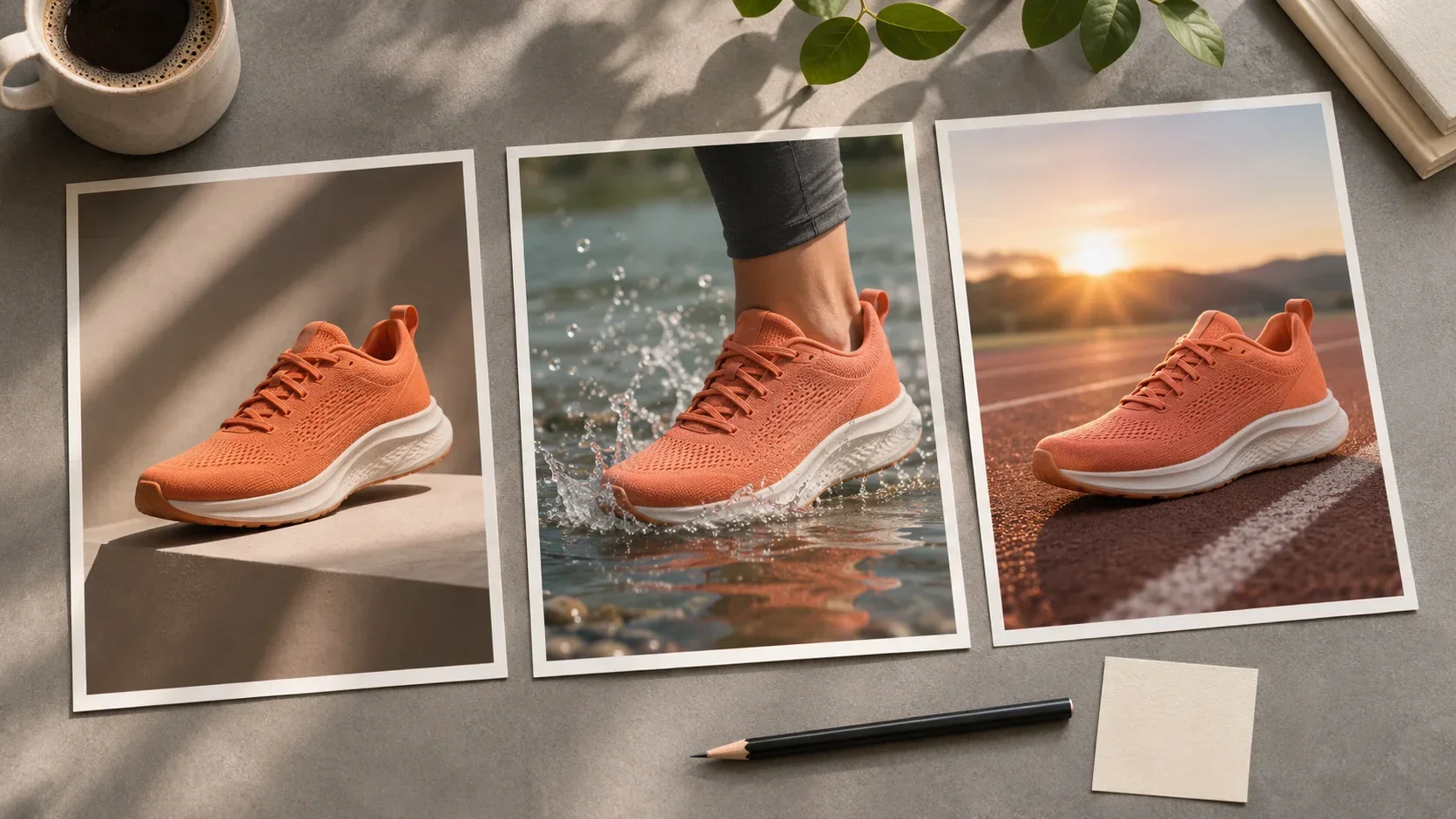
Consider a hypothetical footwear label introducing an unbranded orange running shoe. The team wants to know whether a product demonstration or an atmospheric running scene makes the offer easier to act on.
Version A opens with a close view of the shoe as a runner takes a step. Version B opens on the shoe beside an outdoor track in early morning light. Both then use the same product explanation, offer, closing frame, and destination page.
The review should ask whether each opening clearly expresses its assigned idea. If Version A becomes an abstract montage, it no longer represents a demonstration. If Version B includes an extra discount, the comparison has changed. Creative quality matters, but so does keeping the question intact.
Review the whole ad before publishing
Watch each version without the explanation you gave the production team. Can a viewer identify what is being offered? Does the scene support the message on screen? Is the next action understandable?
Check generated details at normal playback speed and on paused frames. Look at product shape, packaging, hands, changing objects, and any lettering. If an image suggests a capability or product characteristic that you cannot support, replace or revise it before it becomes part of the campaign.
Review the actual delivery crop as well. Leave room for captions and interface elements, and make sure the product and closing message remain readable. A beautiful master image can still produce an awkward placement when cropped.
Keep a short launch checklist
- State the creative hypothesis in one sentence.
- Name the primary outcome and the comparison you will use.
- Confirm what changes between versions and what stays consistent.
- Verify the product details, offer, captions, audio, and destination.
- Record the asset names and the test setup before publishing.
Use the distribution platform's experiment controls when appropriate, and follow its current guidance on setup and interpretation. Decide how you will review the result before the first numbers arrive. Avoid declaring a winner simply because one version briefly moves ahead.
Turn the result into the next brief
When the comparison is ready to review, describe what the evidence supports and where it remains uncertain. A useful finding might justify another test; an inconclusive result may mean you need more evidence or a clearer difference between the ideas.
Keep the videos, creative notes, and result together. The next brief should begin with what you learned, including ideas that did not earn a clear answer. That gives your next production a better starting point than another blank timeline.